Choosing the right builder is one of the most important decisions you will make when planning any construction work. Whether you are extending your home, completing a full renovation, or commissioning a new build from the ground up, the quality of the finished project depends almost entirely on the contractor you appoint. This guide explains what to look for in a builder, which questions to ask, and how to identify the warning signs that should send you looking elsewhere.
Know Your Project Before Approaching Builders
Before approaching any builders, be clear about exactly what your project involves. An extension, a loft conversion, and a new build each require different levels of specialist skill and experience. The clearer your brief at the outset, the more accurate your quotes will be and the easier it becomes to compare contractors on a like-for-like basis. If your project requires planning permission or building regulations approval under the Building Regulations 2010, having drawings prepared in advance will speed up the process and reduce the risk of abortive costs further down the line.
What to Look for in a Builder
Credentials and Trade Memberships
There is no legal requirement in the UK for a general builder to hold a specific licence, which makes independent verification all the more important. For specialist elements of the work, check that the relevant certifications are in place. Electrical work should be carried out by a competent, registered contractor (such as NICEIC or ELECSA) to ensure compliance with Part P of the Building Regulations. Gas work must, by law, be carried out by a Gas Safe registered engineer. For the broader build, membership of a recognised trade body such as the Federation of Master Builders or TrustMark provides independent oversight and confirms a commitment to professional standards. Always ask for proof of membership and confirm it directly with the relevant body.
Portfolio and Client References
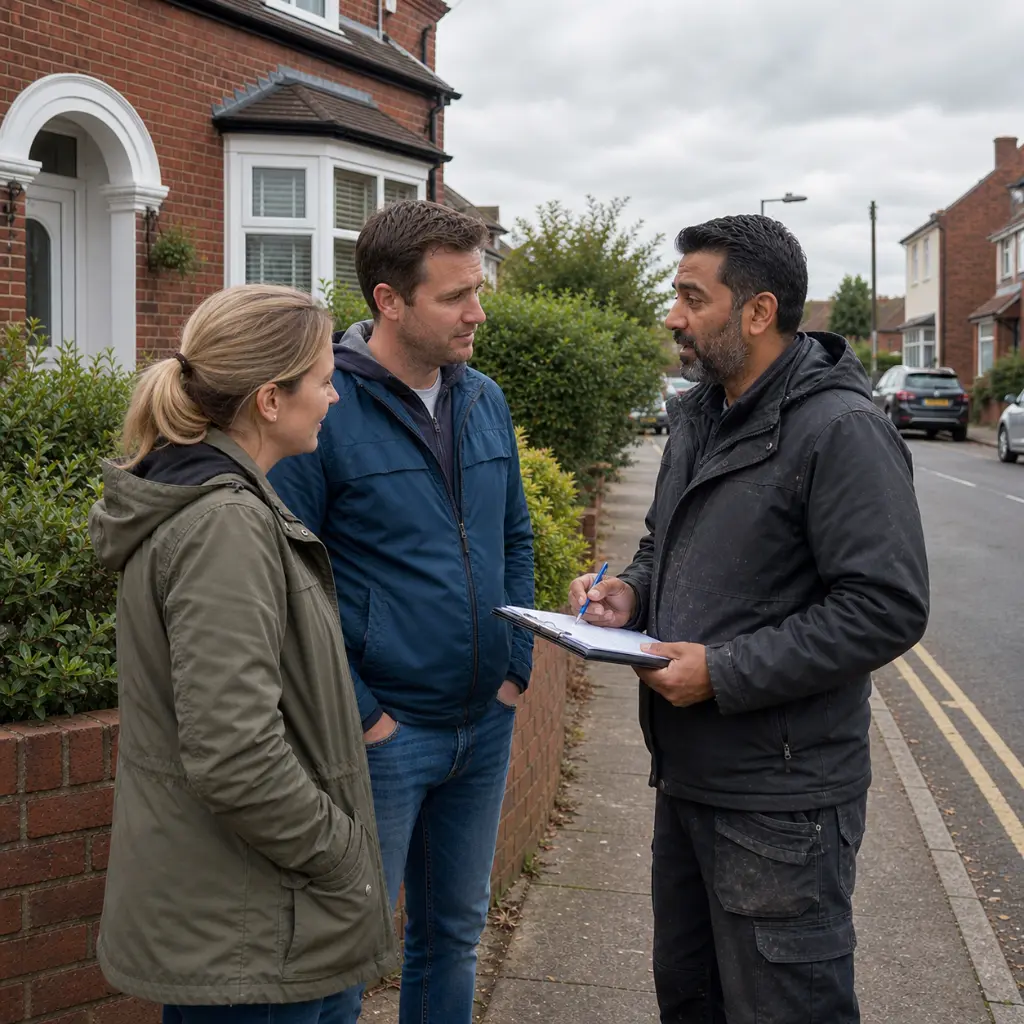
A reputable builder will have no hesitation in sharing examples of completed projects and putting you in contact with previous clients. Ask to visit at least one finished site where possible and speak to the homeowner directly rather than relying solely on testimonials supplied by the builder. Look at the quality of finishes, the precision of brickwork and joinery, and whether the project remained broadly within the agreed scope and budget. Online reviews can supplement your research, but direct references from verifiable clients carry considerably more weight.

Communication and Transparency
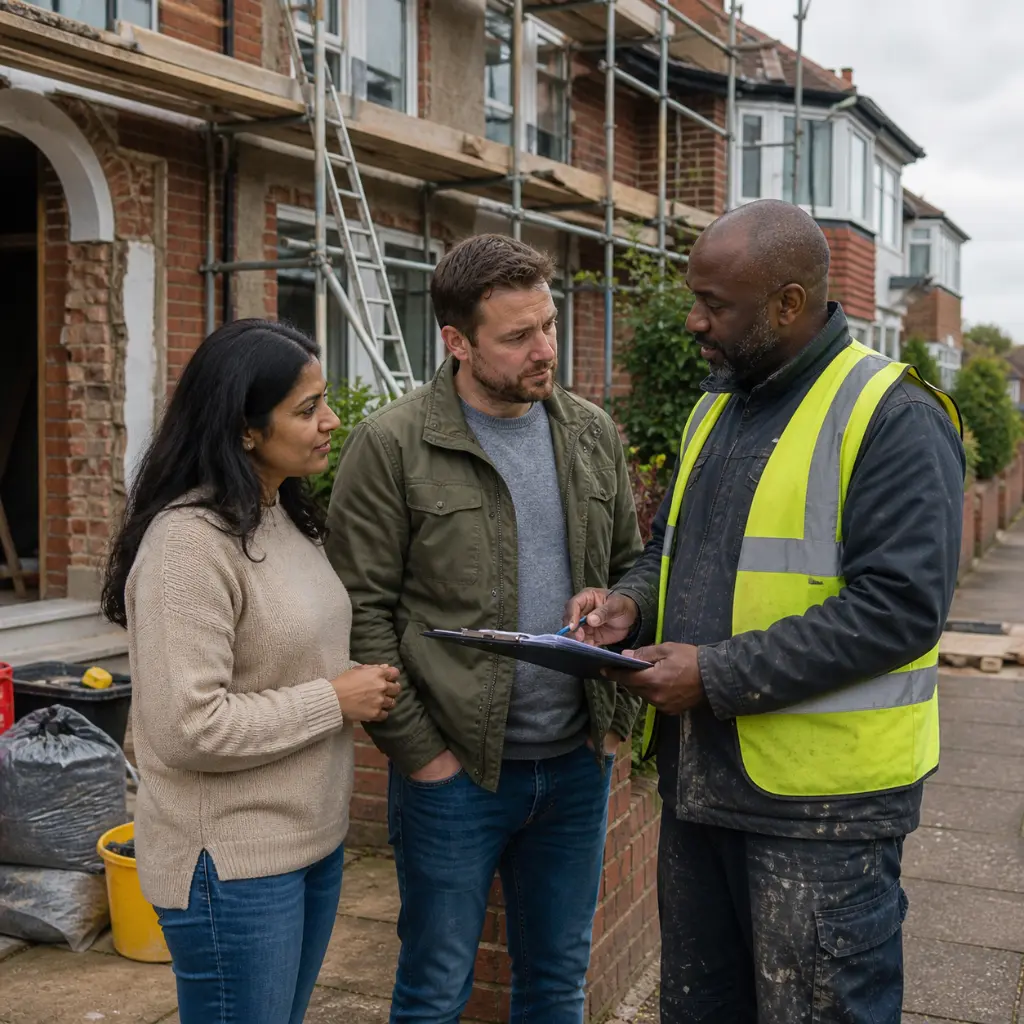
Your working relationship with a builder will span weeks or months, so it is essential to assess how they communicate from the very first conversation. Consider how promptly they respond to enquiries, whether they listen carefully during site visits, and how clearly they explain costs and timescales. A contractor who is vague about the programme, reluctant to commit to a written timeline, or unable to break down where your budget is going is unlikely to improve once work is under way. Good communication at the beginning is one of the strongest indicators of a smooth project.
Insurance and Contracts
Before any work begins, ask to see current certificates for public liability insurance and employers liability insurance. Do not simply accept a verbal assurance; request the documents. You should also insist on a written contract that sets out the full scope of work, the agreed price, payment schedule, start and completion dates, and a clear process for managing variations and resolving disputes. A properly drafted agreement protects both parties and is your primary tool for avoiding costly disagreements mid-build.
Getting and Comparing Quotes
Always obtain a minimum of three written quotes before appointing any contractor. The cheapest option is not automatically the best, and an unusually low figure often means that materials, sub-contractor costs, or contingency have been left out. A well-prepared quote should reflect not just price, but the long-term value of the build, rather than focusing purely on upfront costs. Ask each builder to itemise their quote, separating labour from materials so that comparisons are straightforward.
Confirm whether VAT is included in the totals. Builders registered for VAT will charge 20 percent on most residential works. However, new build residential projects may qualify for the VAT zero rate, which can represent a significant saving. It is worth raising this point with your builder before you commit to any figures.
What Questions to Ask a New Home Builder
Before appointing any contractor, put these questions directly to each builder you are seriously considering:
1. Can I see examples of recently completed projects that are similar in scope to mine, and speak to those clients directly?
2. Are you and all sub-contractors fully insured? Can I see current certificates for public liability and employers liability cover?
3. Is your quote a fixed price, or are there circumstances in which the total could increase once work has started?
4. Who will be responsible for day-to-day site management, and will there be one dedicated point of contact throughout?
5. How do you handle programme delays, and how much notice will you provide if the agreed timeline is under pressure?
6. What does your snagging and defects process look like after completion, and how long does your workmanship guarantee run?
The answers reveal how a builder operates before a single brick is laid and give you a clear basis for comparison across contractors.
What to Watch Out for Before You Commit
The following behaviours are warning signs that should prompt you to look elsewhere. Many of these issues arise from poor site management and a lack of transparency, both of which are common causes of construction problems:
• Pressure to sign or begin work before a written contract has been agreed and signed by both parties
• A deposit request that exceeds 25 percent of the total agreed project cost
• Reluctance to provide references or to allow you to visit completed projects in person
• A quote that is significantly lower than all others with no credible explanation for the difference
• No verifiable business address, Companies House registration, or trade body membership
• An offer to reduce the price in return for a cash payment, which may indicate VAT evasion
Why a Written Contract Is Non-Negotiable
A written contract is not an optional formality. It is your primary protection if the project runs over budget, the work falls short of the agreed standard, or a dispute arises. The contract should cover the full scope of work, the agreed price, the payment schedule, programme dates, the variation process, and the mechanism for resolving disagreements. Both parties must sign before any work begins. For larger residential projects, a standard form such as a JCT Homeowner Contract provides a well-recognised structure that experienced builders will be comfortable working with. Never start building work on a verbal agreement alone.
Final Checklist Before You Appoint
Before confirming your choice, make sure you can tick every item below:
- At least three written, itemised quotes obtained and compared
- Start date, programme milestones, and full payment schedule confirmed in writing
- Written contract reviewed, agreed, and signed by both parties before work begins
A builder who meets all of these standards without hesitation is one you can place your confidence in. Taking the time to choose the right home builder at the outset is the single most effective step you can take to protect your investment and ensure the project is delivered to the standard you expect.
Conclusion
Choosing the right builder is not about finding the cheapest quote or the most impressive website. It is about finding a contractor whose standards, communication, and track record give you genuine confidence before a single tool is lifted. The credentials, references, contract, and questions covered in this guide are not bureaucratic hurdles. They are the practical steps that separate a project delivered well from one that becomes a source of stress and unexpected cost.
The right builder will welcome every one of these questions. The wrong one will not. If you are planning a new build, extension, or renovation and want a contractor who meets every standard in this guide, get in touch with the Ionesi Development team to discuss your project.