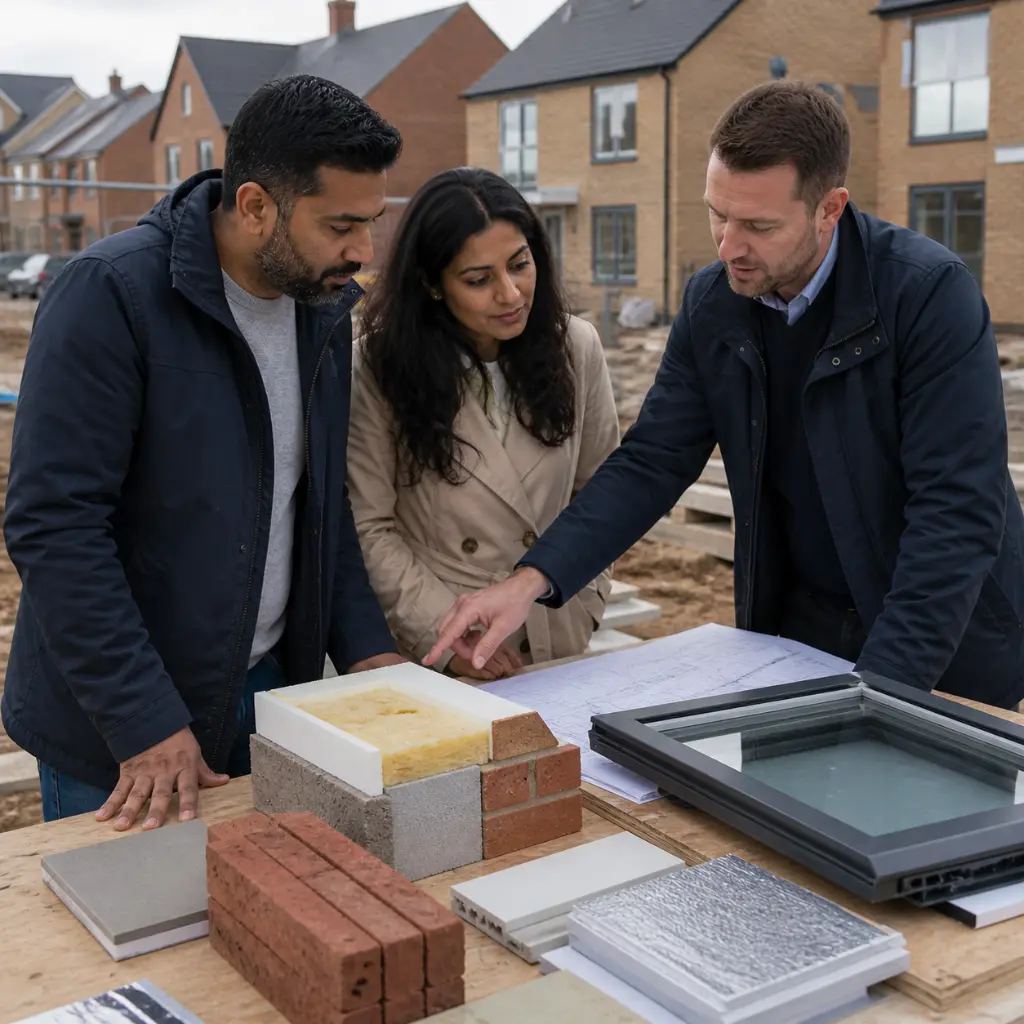
Every homeowner wants a property that holds its value, performs well through the decades, and does not return a string of costly repair bills. Yet longevity in construction rarely happens by accident. It is the result of deliberate decisions made at every stage of a project, from the quality of the specification drawn up before work begins to the skill with which the final finishes are applied. Drawing on insights from experienced construction specialists, this guide explains what building for long-term performance involves and how choices made during construction directly influence a home’s durability.
Why Building for Longevity Matters More Than Ever
The UK housing stock already contains millions of homes that are ageing faster than they should because corners were cut during construction. Repair and maintenance costs accumulate quickly when foundations are undersized, moisture barriers are poorly installed, or low-grade materials are used in place of durable alternatives. For anyone commissioning a new build or major renovation, quality construction for long-term homes is not a premium extra — it is the only rational approach. The up-front cost difference between a well-specified build and a value-engineered one is often modest; the long-term difference in performance, running costs, and resale value is considerable.
It Starts Before a Brick Is Laid
Site Investigation and Structural Design
Long-lasting construction begins below the surface. A thorough ground investigation identifies soil type, bearing capacity, water table levels, and any subsurface conditions — including tree root proximity or previous land use — that could affect the substructure. This information directly shapes foundation design. Homes built without proper site investigation often suffer from differential settlement, wall cracking, and damp penetration years after completion, all of which are expensive to remedy. Under the Building Regulations 2010, Part A, the structural design must demonstrate that the building will remain stable under the loads it will experience across its intended lifespan. Getting this right at the outset costs a fraction of what remediation later demands.
Getting the Specification Right
The specification sets out the materials and build methods to be used throughout the project. A detailed specification leaves nothing open to interpretation on site and gives the contractor clear quality benchmarks. Cutting specification quality to reduce initial cost is one of the most common sources of long-term building failure. Materials that appear similar in isolation can vary enormously in performance. Choosing a dense engineering brick over a soft sand-faced alternative, or a through-colour fibre cement board over a painted timber cladding, can add decades to the life of an external element with little or no additional maintenance required.
The Durability of Building Materials
Material selection has a direct bearing on how long a home remains in sound condition and what ongoing upkeep it will demand. The table below summarises the typical performance of the most common materials used in UK residential construction, along with their maintenance requirements and most appropriate applications.
| Material / Element | Typical Lifespan | Maintenance Requirement | Best Application |
| Facing brick / masonry | 100+ years | Very low — repoint every 30 to 40 years | External walls on new builds and extensions |
| Through-colour render | 20-30 years | Medium — inspect and repaint every 10 to 15 years | Contemporary extensions, secondary elevations |
| Treated timber cladding | 25-40 years | Medium — re-treat or repaint every 5 to 8 years | Feature elevations, low-rise additions |
| Fibre cement cladding | 40-50 years | Low — check fixings and sealants every 10 years | Modern extensions, exposed or coastal locations |
| Concrete interlocking tiles | 50-60 years | Low — annual check, replace cracked units | Pitched roofs on most UK residential properties |
| Natural slate | 80-100 years | Low — re-bed ridge every 25 to 30 years | Premium new builds and heritage properties |
| EPDM / GRP flat roofing | 25-50 years | Low — annual seam and upstand inspection | Flat roof extensions, canopies, garage roofs |
| Cavity wall construction | Life of building | Nil — verify installation quality at build stage | All modern UK homes, required under Part L |
Where budget is limited, it is generally preferable to concentrate quality in the elements that are most difficult or costly to replace: the foundations, structural frame, external envelope, and roof. Finishes and fittings are far easier to update at a later stage.
How UK Weather Tests Every Build
British weather is among the most demanding for building fabric. Prolonged periods of driving rain, freeze-thaw cycling throughout winter, and persistently high relative humidity place constant stress on external walls, flat roofs, window reveals, and below-ground structures. The Building Regulations 2010 address these conditions directly through Part C, which covers resistance to moisture and contaminants, and Part L, which governs the conservation of fuel and power. Homes built to exceed minimum compliance thresholds generally perform better over time, particularly when combined with good design, workmanship, and maintenance.
Quality Construction at the Build Stage
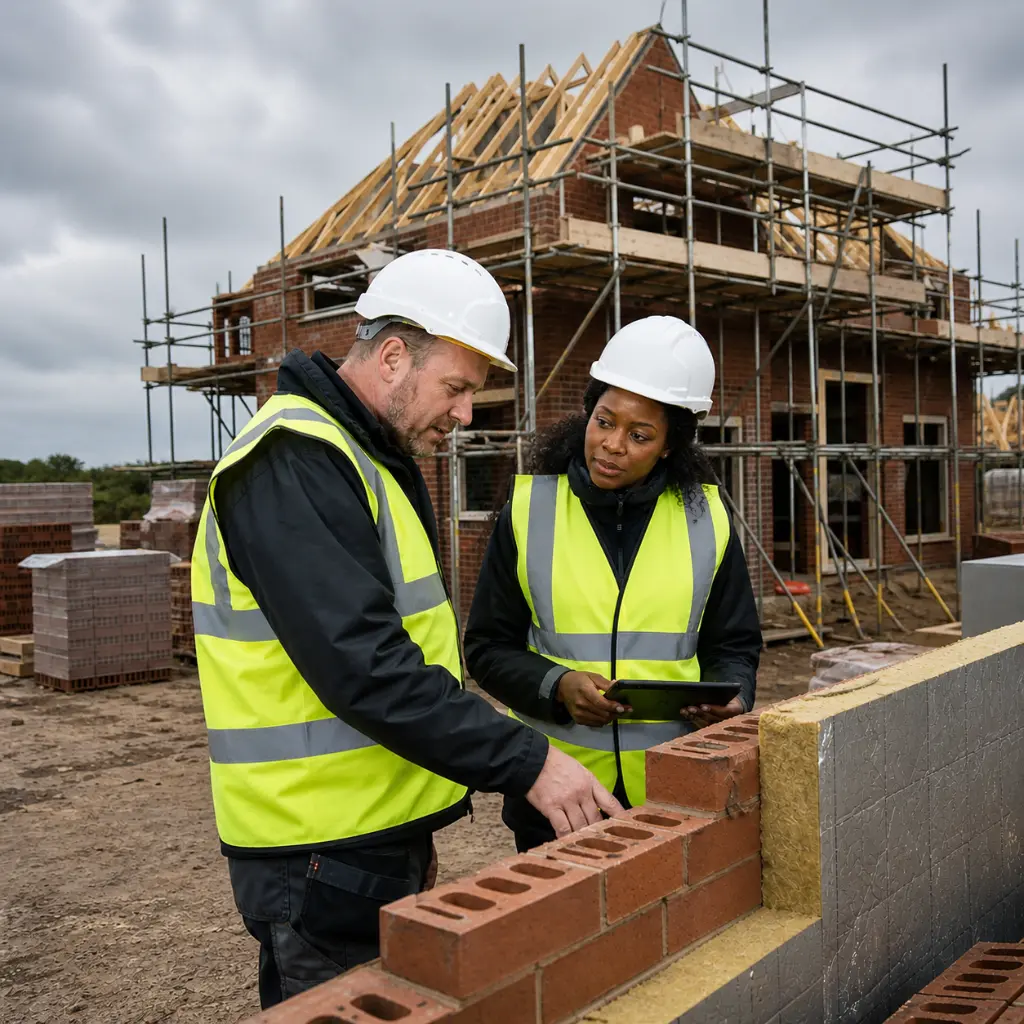
Even the best specification fails if workmanship is poor. Long-lasting construction requires experienced tradespeople working to a managed programme, with quality inspection points built in at key stages. For homeowners still in the early planning phase, selecting a contractor with proven standards and oversight processes is critical, as explored in this guide on choosing a reliable builder.
These stages typically include foundation approval before concrete is poured, pre-pour checks on reinforcement positioning, damp-proof course and cavity tray installation before masonry proceeds, roof structure sign-off before weatherproofing is applied, and first-fix inspections for mechanical and electrical services. Building control inspections under the Building Regulations provide a statutory baseline, but a diligent main contractor will conduct internal quality checks between those statutory visits. A defect identified at the correct stage costs very little to correct; the same defect discovered at snagging, or worse, after handover, is exponentially more expensive.
The Thermal Envelope and Moisture Control
A home built for longevity performs well thermally and remains dry throughout its life. The thermal envelope is the continuous insulated barrier formed by the walls, roof structure, and ground floor. Gaps, cold bridges, and poorly detailed junctions allow warm moist air to condense within the structure, leading to mould growth, timber decay, and progressive degradation of insulation performance. Under Part L of the Building Regulations, new build homes must meet defined U-value targets for each element of the envelope. Specifying continuous insulation, appropriate vapour control layers, and properly designed junctions adds very little to construction cost at the build stage. Retrofitting them after completion is frequently invasive, disruptive, and costly.
Designing for Low Maintenance
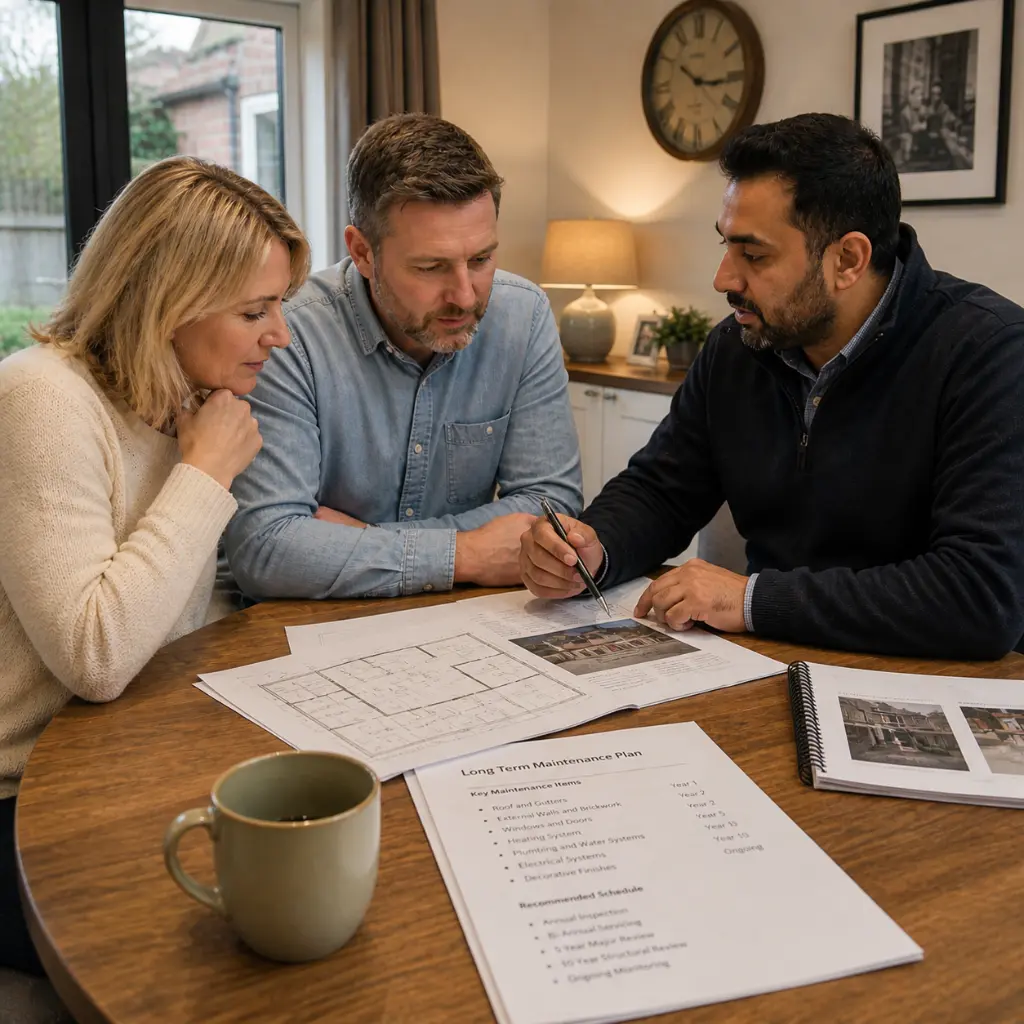
Homes that are straightforward to maintain are more likely to be properly looked after. Several decisions at the design stage reduce the long-term maintenance burden significantly:
• Select materials with inherent weather resistance rather than relying on applied coatings that require periodic renewal
• Position drainage outlets, gutters, and service access points where they can be safely reached without specialist equipment
• Detail flat roofs with adequate falls, sealed upstands, and accessible inspection hatches at every low point
• Specify window and door frames with proven long-term performance credentials in the UK climate, with manufacturer guarantees to match
• Design external wall junctions, cills, and copings to shed water positively rather than relying on sealant alone
None of these decisions add significant cost at the build stage, but collectively they can save thousands of pounds over the life of the property and preserve the building’s condition far more effectively.
The Long View
Building for longevity is not about selecting the most expensive materials available. It is about making informed, deliberate decisions at every stage of the project: ground investigation, specification, workmanship, thermal performance, and maintenance design. Homes built with this mindset hold their value, cost less to run, require less reactive repair work, and stand as sound structures for generations. The foundations of a long-lasting home are laid long before the first brick is placed. Planning a new build, extension, or renovation? Get in touch with Ionesi Development to discuss your project with our team.