
Introduction
Walk down almost any residential street today, and you will notice how quickly traditional driveway surfaces are changing. Cracked tarmac and weed filled block paving are increasingly being replaced by modern resin driveways that offer cleaner appearance, better durability, and far lower maintenance. As UK homeowners focus more on practicality and kerb appeal, resin surfacing has become a popular choice for creating outdoor spaces that look smarter and perform better throughout the year. Homeowners planning wider exterior upgrades often explore ideas from modern home renovation specialists before starting driveway improvements.
What a Resin Driveway Actually Is
Behind the polished appearance sits a fairly straightforward construction. Natural stone aggregate is mixed with a clear, UV-stable resin and trowelled across a prepared base, typically existing tarmac or fresh concrete. Once cured, the result is a smooth, flat surface with the colour and texture of the stone visible throughout.
There are two variations worth knowing about. A resin-bound driveway mixes the aggregate and resin before laying, which produces a permeable finish that allows water to drain through. A resin-bonded driveway scatters loose stone over a layer of wet resin, creating a rougher, non-permeable surface that resembles gravel but stays in place. For UK homes, the bound version has become the clear preference. It manages rainfall sensibly, looks neater over time, and meets the drainage expectations that increasingly shape what homeowners are allowed to do with their front gardens.
The Practical Reasons Behind the Surge in Popularity
A Finish That Lifts the Whole Property
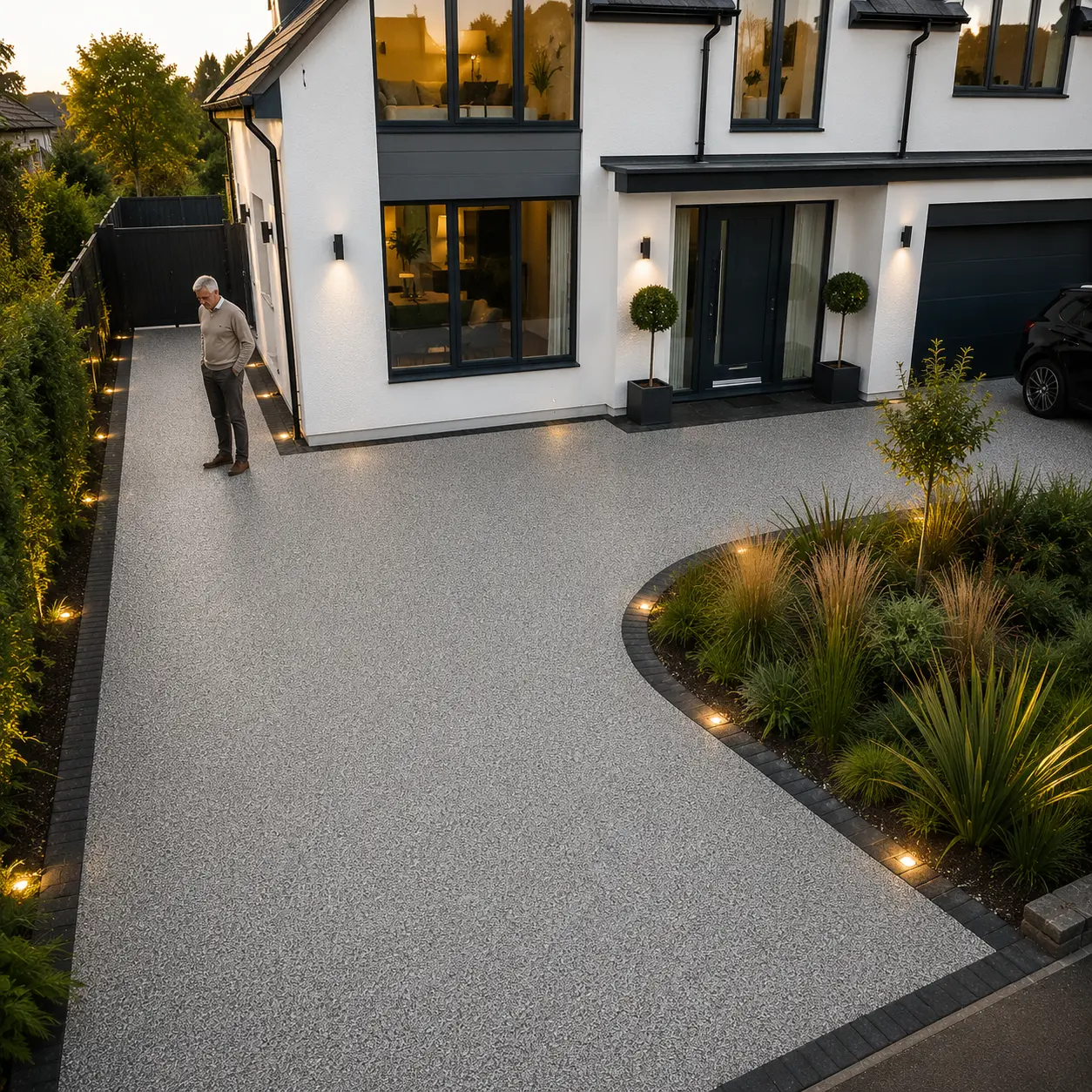
The front of a home accounts for a surprisingly large portion of its visual impression, and the driveway often takes up most of that view. A worn surface can pull down the appearance of even a well-maintained house, while a smooth, well-chosen resin finish can do the opposite. The seamless surface lacks the joins, gaps, and weed lines that gather on traditional paving, and the choice of aggregate colours allows the driveway to either blend with the property or provide a deliberate contrast.
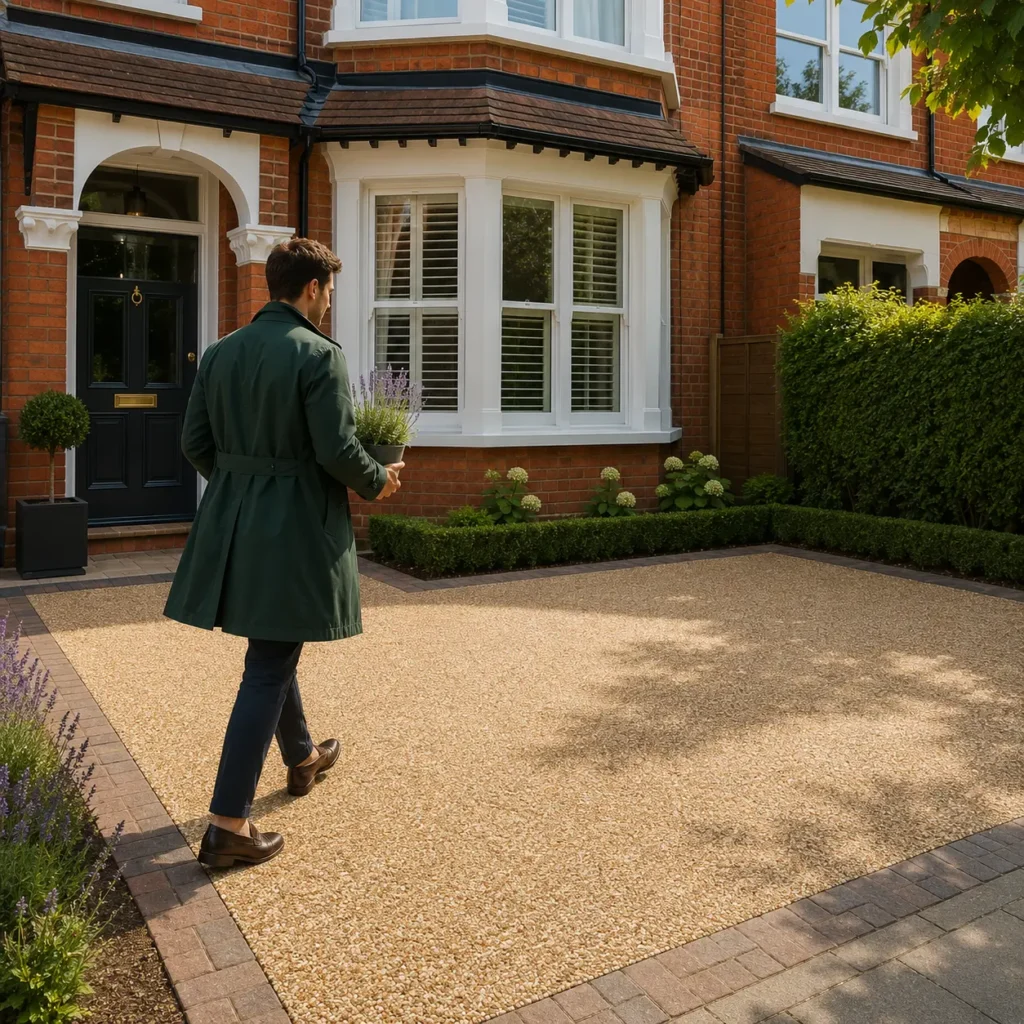
Warmer aggregate blends in golds and creams tend to suit Victorian and Edwardian homes with red or yellow brickwork. Cooler greys and charcoal work well alongside rendered properties, contemporary new builds, and modern extensions. The decision is rarely about following a style guide. It is about finding a colour and texture that feels right for the building it sits in front of.
Drainage Built for British Weather
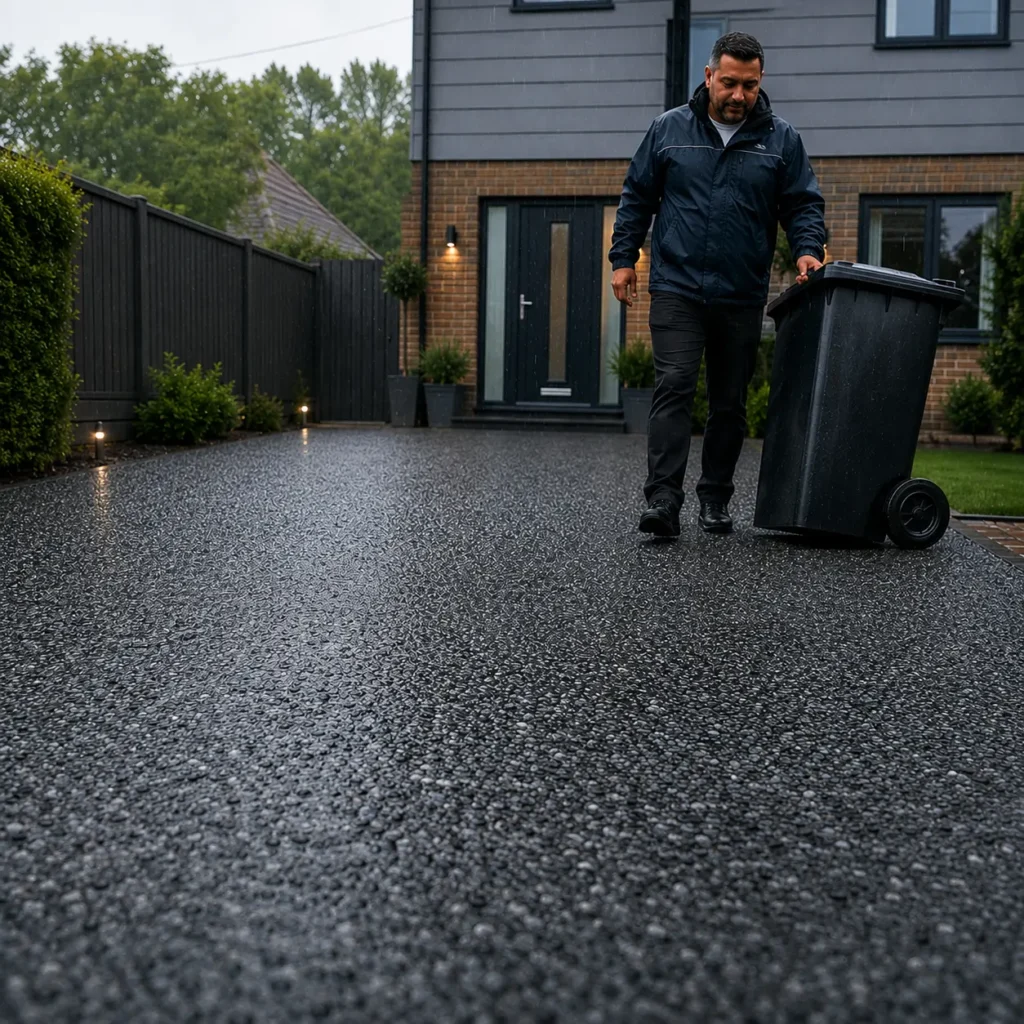
Few surfaces are tested more honestly by the UK climate than a driveway. Heavy autumn rain, weeks of damp drizzle, freezing winter mornings, and the slow saturation of poorly draining surfaces all take their toll. A resin-bound driveway is permeable, which means rainwater passes through the surface and into the prepared sub-base below rather than collecting in puddles or running off into the road.
This matters for two reasons. The first is everyday comfort. No standing water means no splashing across the surface when walking to the car, no large ice sheets forming in winter, and no gradual erosion of the underlying ground. The second reason is regulatory. Planning rules around paving over front gardens were tightened years ago to address surface water run off, and permeable surfaces remain the straightforward route to avoiding a planning application when upgrading a driveway. For homeowners who want a project that moves forward without bureaucratic delay, this is a meaningful advantage.
Built to Last Through Daily Use
Driveways take a steady beating. Cars sit on them, reverse across them, and drip oil onto them. Bins are wheeled in and out. Children play on them. Bicycles, prams, and visitors all add to the daily wear. Resin surfaces are formulated to flex slightly with changes in temperature, which keeps them from cracking the way concrete or tarmac sometimes does. The UV stable resin holds its colour even after years of direct sunlight, so the finish remains close to how it looked on the day it was installed.
Provided the base preparation is done properly, and a quality installation team handles the laying, a resin driveway will hold up well for many years. The investment sits comfortably in the long-term improvement category rather than the regular replacement one.
A Surface That Does Not Demand Constant Attention
There is a particular kind of frustration that comes with high-maintenance driveways. Block paving needs regular re-sanding and weed treatment between the joints. Loose gravel migrates across the garden, into the road, and through the front door on the soles of shoes. Tarmac softens in summer and cracks in winter. Resin removes most of these recurring tasks.
The sealed, smooth finish gives weeds far fewer places to take hold. The bound stones do not scatter. Cleaning is generally limited to an occasional sweep and a light jet wash when needed, which is a far cry from the weekend afternoons spent attending to other surfaces. For busy households, the time saved adds up across the years.
Safer Underfoot Than Many Realise
The texture of a resin-bound surface offers natural grip, which makes a noticeable difference in wet or icy conditions. The level, stable finish is also far more comfortable for prams, mobility aids, and bicycle wheels than gravel or uneven block paving. Children walking to the car, older relatives visiting, or delivery drivers crossing the driveway all benefit from a surface that behaves predictably underfoot.
It is also quieter than gravel, which is something owners of homes near bedroom windows often appreciate more than they expected to.
How Resin Reshapes the Front of a Home
A driveway upgrade rarely sits in isolation. Replacing a tired surface tends to draw attention to other elements of the front garden, and one of the strengths of resin is how easily it integrates with the surrounding landscaping. The same finish can be carried across pathways, around side returns, up to the front door, and even alongside converted garages or upgraded entrances, helping the entire exterior feel more cohesive rather than pieced together over time.
Borders in contrasting aggregate, brick, or natural stone can frame the driveway and define parking areas. Recessed lighting can be set into the surface or along edges to add definition in the evening. Planted beds can be cut into the layout to soften the appearance and bring greenery back into a space that might otherwise feel hard. The flexibility of the material is one of the reasons it suits such a wide range of property types, from compact terraces with a single parking space to detached homes with sweeping front drives.
Resin Driveway Ideas Worth Exploring
Some homeowners prefer a single tone finish in a neutral aggregate, which tends to suit minimalist front gardens and contemporary new builds where the architecture is the main feature. Others lean toward mixed blends, where two or three aggregate colours are combined to add depth and character, particularly suited to period properties with detailed brickwork. Patterned designs using contrasting borders, inset markers for parking bays, or decorative edging strips can introduce a sense of design without overcomplicating the layout. Larger plots offer scope to combine resin with planted islands, gravel sections, or natural stone features, breaking up the expanse and creating a more landscaped feel.
The right approach depends on the property, the budget, and how much character the homeowner wants the driveway itself to bring to the front of the home.
Why Installation Quality Makes All the Difference
A resin driveway is only as good as the foundation it sits on and the hands that lay it. The base must be properly prepared, free from movement, and graded correctly. The resin and aggregate need to be mixed in precise ratios and applied within a specific window before the resin begins to cure. Weather conditions on the day matter. Temperature, humidity, and timing all influence how the finish settles.
Rushed installation, poor base preparation, or inexperienced application produce uneven surfaces, soft patches, and finishes that begin to fail within a short time. A driveway is not the place to compromise on the team handling the work. The cost of getting it right the first time is always lower than the cost of putting it right later.
Are Resin Driveways Worth the Investment?
For most UK homeowners, the answer is yes. The upfront cost sits above basic tarmac or gravel, but the long lifespan, reduced maintenance, and visual impact tend to justify the difference comfortably. The surface holds up to British weather, complements a wide range of property styles, and contributes meaningfully to the overall presentation of the home, while also helping to future-proof the property with a lower-maintenance exterior surface designed to perform well for years to come. For those planning to stay in the property, the daily benefits speak for themselves. For those thinking ahead to resale, a well-finished driveway adds to the first impression every viewing creates.
Conclusion
The rise of resin driveways across the UK is not a passing trend. It reflects what homeowners genuinely want from the front of their homes, which is a surface that looks considered, performs reliably, and does not demand weekend after weekend of upkeep. If you are weighing up whether a resin driveway would suit your property and would like a practical conversation about the options, the team at Ionesi Development is happy to discuss your plans and help you reach a confident decision before any work begins.