TLDR:
Building control inspections are legally required at specific stages of every notifiable UK construction project. This guide covers each stage from commencement to completion certificate, what gets checked, and what to have ready.
Introduction
Starting a construction project in the UK comes with a clear legal obligation: building control inspections. Whether you are building a new home, extending a property, or undertaking a commercial development, a building control officer must review and sign off your work at key stages. Working with an experienced contractor such as Ionesi Development can help ensure inspections are scheduled correctly and compliance is maintained throughout the project.
Missing an inspection can mean enforcement notices, costly delays, or having to uncover completed work. This guide explains every stage, what gets checked, and how to keep your build fully compliant from start to finish.
Table of Contents
- What Is a Building Inspection in the UK?
- Why Building Inspections Are Non-Negotiable
- When Does Building Control Inspect? Every Stage Explained
- Building Control Inspection Checklist
- What Happens If You Fail a Building Inspection?
- Tips to Keep Your Build Inspection-Ready
- Conclusion
What Is a Building Inspection in the UK?
A building inspection is an official assessment confirming that construction work meets the Building Regulations 2010. These cover structural safety, fire protection, energy efficiency, drainage, and ventilation.
In the UK, inspections are not optional. Any notifiable building work must be assessed at set stages before proceeding. Without a valid completion certificate at the end, the property cannot be legally signed off, which creates problems when selling, remortgaging, or insuring.
Local Authority Building Control vs Approved Inspectors
There are two routes available in England and Wales:
| Route | Who Carries It Out | Best For |
| Local Authority Building Control (LABC) | Your local council | Standard residential and commercial projects |
| Approved Inspector | A privately certified inspector | Larger or faster-paced developments |
Both routes carry equal legal authority. You must notify your chosen route at least two days before work begins on site.
Why Building Inspections Are Non-Negotiable
Inspections act as independent checkpoints throughout the build. They confirm foundations are solid, structural elements are correctly installed, and that drainage, insulation, and fire safety all meet current standards. Their importance becomes even clearer when assessing different project approaches, particularly when deciding between renovation and rebuild.
Beyond safety, a completion certificate is essential when the property is sold or remortgaged. Buyers and lenders routinely ask for proof that all building control stages were properly completed. Without it, your project is not legally finished.
When Does Building Control Inspect? Every Stage Explained
Inspections are scheduled at specific stages. Work cannot legally proceed past each stage until the officer has visited and approved what they see. Here is every stage in order:
1. Commencement Notice
Before any work starts, you must notify building control. This registers the project and triggers the inspection schedule. Failure to notify means work begins without an official record, creating serious problems when you later need the completion certificate.
2. Foundation and Excavation Stage
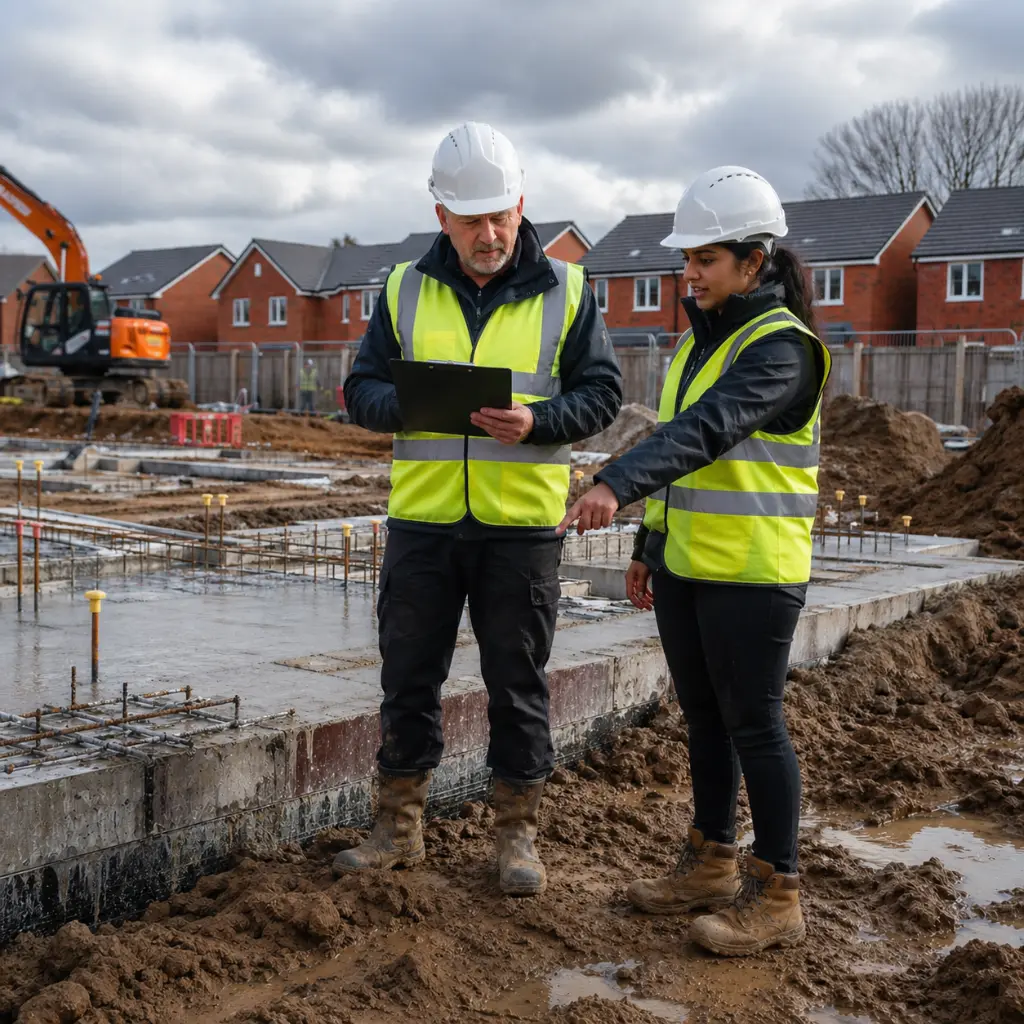
Once excavations are open, the inspector must visit before any concrete is poured. They check depth, width, and ground conditions against the approved plans. Once concrete is in, there is no way to inspect what lies beneath.
3. Damp Proof Course and Oversite Concrete
The DPC is a waterproof layer in the masonry at ground level that stops rising damp. The inspector checks it sits at the correct height, is properly lapped at corners, and runs continuously around the full structure.
4. Structural Frame and First Fix
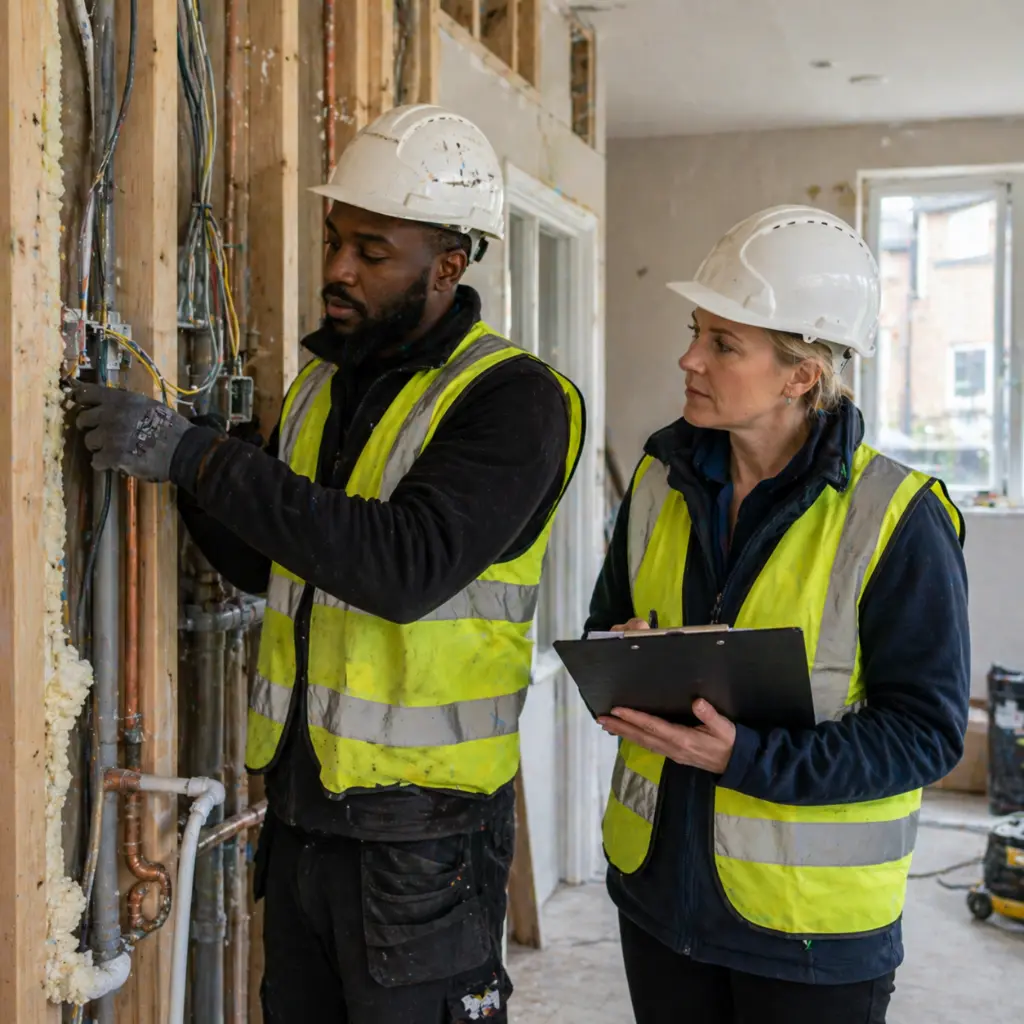
Load-bearing walls, floor joists, beams, lintels, and steelwork are checked against the engineer’s specifications. Initial electrical cabling, plumbing pipework, and insulation may also be reviewed before being enclosed behind plasterboard.
5. Drainage and Drain Testing
All drainage runs must be inspected and tested before backfilling. The officer checks pipe gradients, junctions, and chambers. A pressure or water test confirms the system is watertight. Only then can trenches be covered over.
6. Roof Structure and Weathertight Stage
With the roof structure in place, the inspector checks timber sizing, truss spacing, and restraint straps against the design calculations. The building should be fully weathertight at this stage before interior fit-out begins.
7. Completion Inspection and Certificate
The final walkthrough confirms full compliance: fire doors, smoke alarms, insulation, ventilation, and staircases. Once satisfied, the officer issues the completion certificate. This document confirms your build is legally finished and ready for occupation. Keep it safe.
Building Control Inspection Checklist
Have these ready before every stage inspection to avoid delays and return visits:
• Approved plans and structural engineer calculations kept on site at all times
• Building notice or full plans approval documentation available for the officer
• Materials on site that match the approved specification
• Clear and safe site access for the inspector with no obstructions
• Nothing covered over or backfilled before the inspection has taken place
• Relevant test results ready, such as drain pressure tests or air tightness readings
If uncertain about what is needed for a specific stage, contact your building control officer ahead of the visit.
What Happens If You Fail a Building Inspection?
A failed inspection means specific elements do not meet the required standard. The officer issues a written notice detailing what must be corrected. Once remedial work is completed, a re-inspection is booked.
Act quickly. Delays in addressing the issues push back the programme and increase costs. Work must not continue past the failed stage until a satisfactory re-inspection is signed off. If you believe a decision is incorrect, a formal appeal can be made through the relevant authority.
Tips to Keep Your Build Inspection-Ready
These habits will make every inspection run more smoothly:
• Notify building control in advance. Do not wait until the last minute as officer availability varies
• Never cover work before it has been inspected. This is the most common cause of enforcement action
• Record any design changes and seek approval for significant variations before proceeding
• Work with experienced contractors who understand what inspectors expect at each stage
• Engage your building control officer early. They are there to help, not just to sign off
Conclusion: Build It Right From the Start
Building control inspections are not a formality. They are a structured safety system protecting everyone connected to a construction project.
Knowing when each inspection happens, what gets checked, and how to prepare gives you the confidence to manage your build efficiently and reach that completion certificate without unnecessary delays.
Ready to Start Your Project the Right Way?
Ionesi Development delivers construction projects that meet building regulations at every stage, from the first commencement notice to the final completion certificate.
Visit: ionesidevelopment.co.uk to speak with our team today.