Introduction
Most homeowners only think about their roof when something visibly goes wrong, whether it is a slipped tile, a ceiling stain, or a leak during heavy rain. What often causes those problems, however, is poor ventilation hidden inside the roof space. Roof ventilation problems can quietly trap moisture and heat for months before any obvious signs appear, leading to damage that becomes expensive to repair over time. The British climate places constant pressure on roofs due to damp winters, humidity, and changing temperatures, making proper airflow far more important than many homeowners realise. For those planning roof upgrades or wider property improvements, guidance from experienced home renovation and construction specialists can help prevent long term structural and moisture related issues.
The Quiet Mechanics of a Healthy Roof
A roof that functions properly does far more than keep rain out. It manages a continuous exchange of air between the loft space and the outside environment. Cooler outside air enters at the lower edges of the roof, generally through the soffits, rises through the loft cavity as it warms, and leaves through openings near the ridge or high on the slopes. This passive movement is what keeps timbers dry, insulation effective, and roofing materials performing as they should.
The principle is simple, but the balance is precise. Intake and exhaust must work in proportion. If the loft can take air in but cannot let it out, warm, humid air stagnates against the cold underside of the tiles. If exhaust outpaces intake, the loft begins to draw moist air upward from the rooms below. Either imbalance creates the conditions for the problems that follow.
How Roof Ventilation Goes Wrong
Condensation Settling Where It Should Not
Condensation is the most common roof ventilation problem we see in UK homes, and it is also the most underestimated. Cooking, bathing, drying laundry indoors, and even breathing release moisture into the air throughout the day. That moisture rises naturally toward the loft. In a well-ventilated roof, it passes through and out. In a poorly ventilated one, it meets cold roof timbers and turns back into water.
The early signs are subtle. Insulation that feels slightly damp to the touch. A faint musty smell on warmer days. Tiny droplets are visible on nails or the underside of the roofing felt during cold mornings. These early indicators are easy to miss, which is exactly why condensation tends to do its damage slowly rather than dramatically.
Mould Taking Hold in the Loft
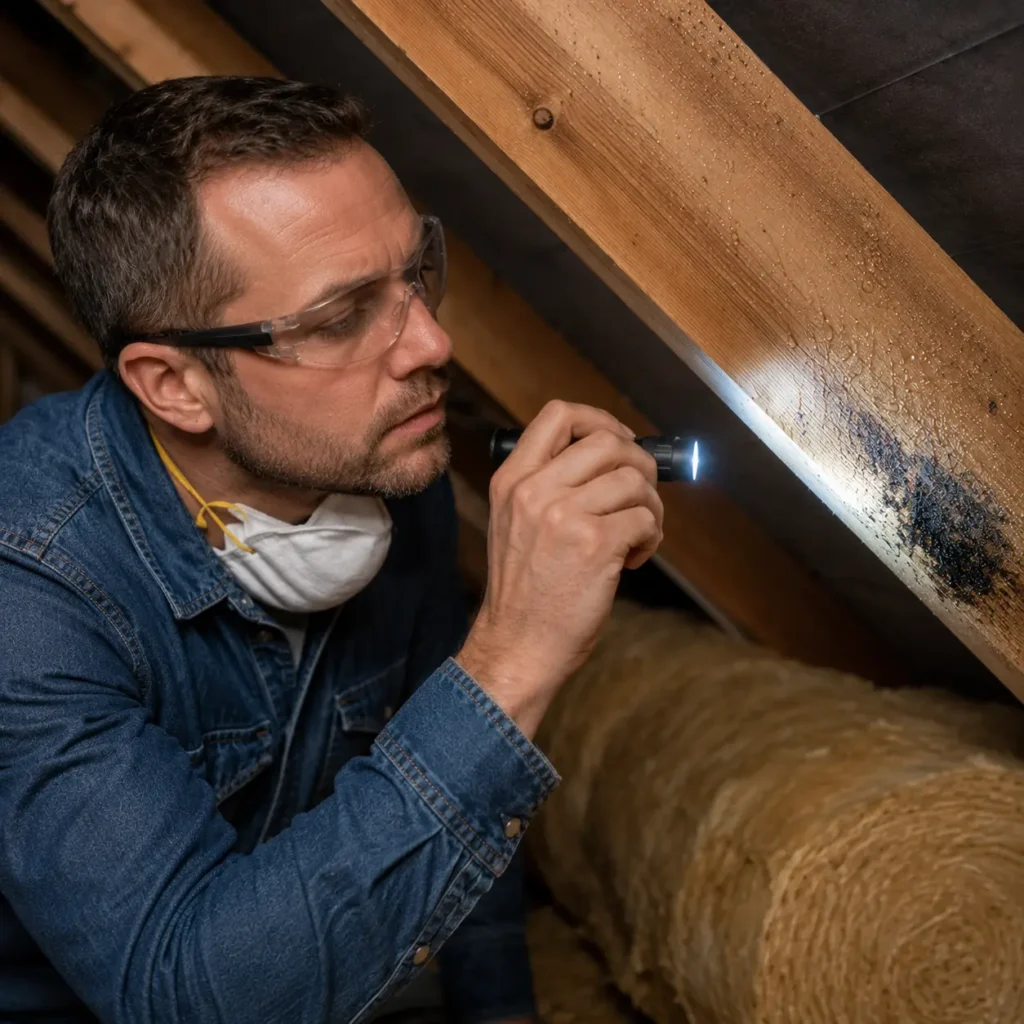
Where moisture lingers, biological growth follows. Black or grey patches on rafters, white powdery deposits on timber, and discoloured patches on insulation all signal that the loft environment has become too damp for too long. Mould affects more than the structure. The spores released into the air can travel down through ceiling gaps and loft hatches into the bedrooms below, which matters considerably in households with young children, older relatives, or anyone with respiratory sensitivities.
The combination of recent insulation upgrades and unchanged ventilation is a particularly common cause. Homes that were ventilated adequately for decades suddenly develop mould within a year or two of new insulation being fitted, simply because the airflow pathways have been altered without anyone realising.
Heat That Has Nowhere to Go
Roof ventilation problems are not confined to winter. During warm summer spells, an unventilated loft can become surprisingly hot, and that heat radiates downward into the rooms beneath. Households in loft conversions or top-floor flats are usually the first to notice. Bedrooms become uncomfortable in the evenings, sleep suffers, and fans run constantly. The cause is rarely insufficient insulation. It is the absence of a clear route for trapped warm air to escape.
Damage to the Roof Itself
The materials that make up a roof are designed to perform within a reasonably dry environment. When ventilation fails, the picture changes. Rafters can begin to rot at the ends nearest the eaves, where moisture collects. Metal fixings corrode. Roofing battens lose strength. The underside of tiles and slats can deteriorate, and breathable membranes lose their effectiveness when constantly exposed to high humidity. Each of these problems shortens the lifespan of the roof and brings forward the cost of repairs or eventual replacement.
Insulation That Stops Working
A piece of fibreglass insulation soaked with moisture loses the air pockets that make it effective. Once that happens, heat escapes through the roof at a faster rate, and the household compensates by turning the heating up. Energy bills rise without any obvious cause. Many homeowners spend years paying for heating that is leaking straight out of the loft, never realising that the underlying issue is ventilation rather than the insulation itself.
Recognising Poor Roof Ventilation Early
A quick check of the loft, ideally during a cold spell when condensation issues show themselves most clearly, can reveal a great deal. Look at the timbers near the eaves and at the ridge. Dark staining, blackening, or visible mould all indicate moisture problems. Feel the insulation in several places. It should feel dry, light, and springy rather than flat, heavy, or damp.
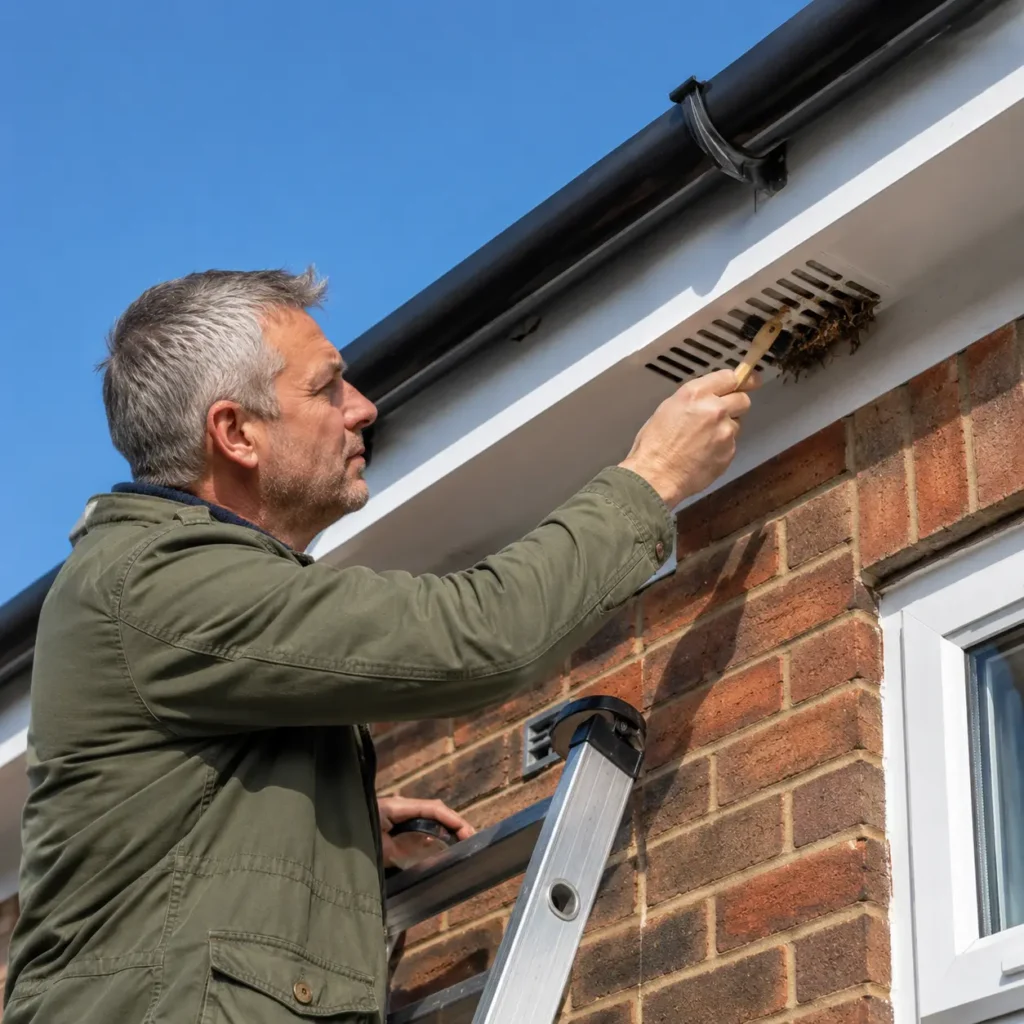
From outside, take a look at the soffits. Vents should be clearly visible and unobstructed. Painted-over vents, blocked grilles, and nests built into ventilation openings are all common findings that disrupt airflow without the homeowner ever knowing. Check whether the ridge of the roof has any visible ventilation. On older homes without ridge vents, look for tile vents or slate vents on the upper slopes.
Inside the home, persistent damp patches on top-floor ceilings, peeling paint in upstairs corners, mould forming around the loft hatch, and bedrooms that feel stuffy or cold despite the heating all point upward toward the roof.
What Actually Causes These Issues
The single most common cause is blocked soffit vents. When loft insulation is rolled out without care, it pushes right up to the eaves and covers the intake openings. Air can no longer enter the loft, and the entire system stalls. Fitting loft baffles or ventilation trays between the rafters keeps a clear channel and resolves the issue, but it has to be done deliberately.
Older homes that were never designed with formal ventilation often relied on natural draughts through gaps in the construction. When those homes are sealed up through double glazing, draught proofing, and modern insulation, the accidental ventilation disappears, and condensation problems begin almost overnight. The improvements were sensible. The missing piece was a planned ventilation strategy to replace what was unintentionally removed.
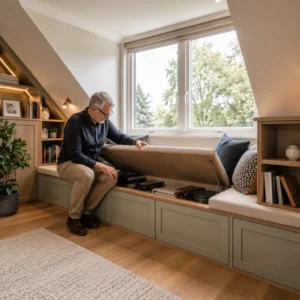
Loft conversions are another recurring source of trouble. Converting a loft into a bedroom or office fundamentally changes how warm air moves through the property. Without a redesigned ventilation approach, the remaining unconverted sections of the roof, particularly behind the dwarf walls, can develop serious damp issues within a single winter.
Practical Solutions That Work
The most effective approach is rarely a single fix. Improving intake usually means fitting continuous soffit vents along the eaves, or over fascia vents where soffits are not present. Loft baffles between the rafters preserve the airflow path once the intake is open.
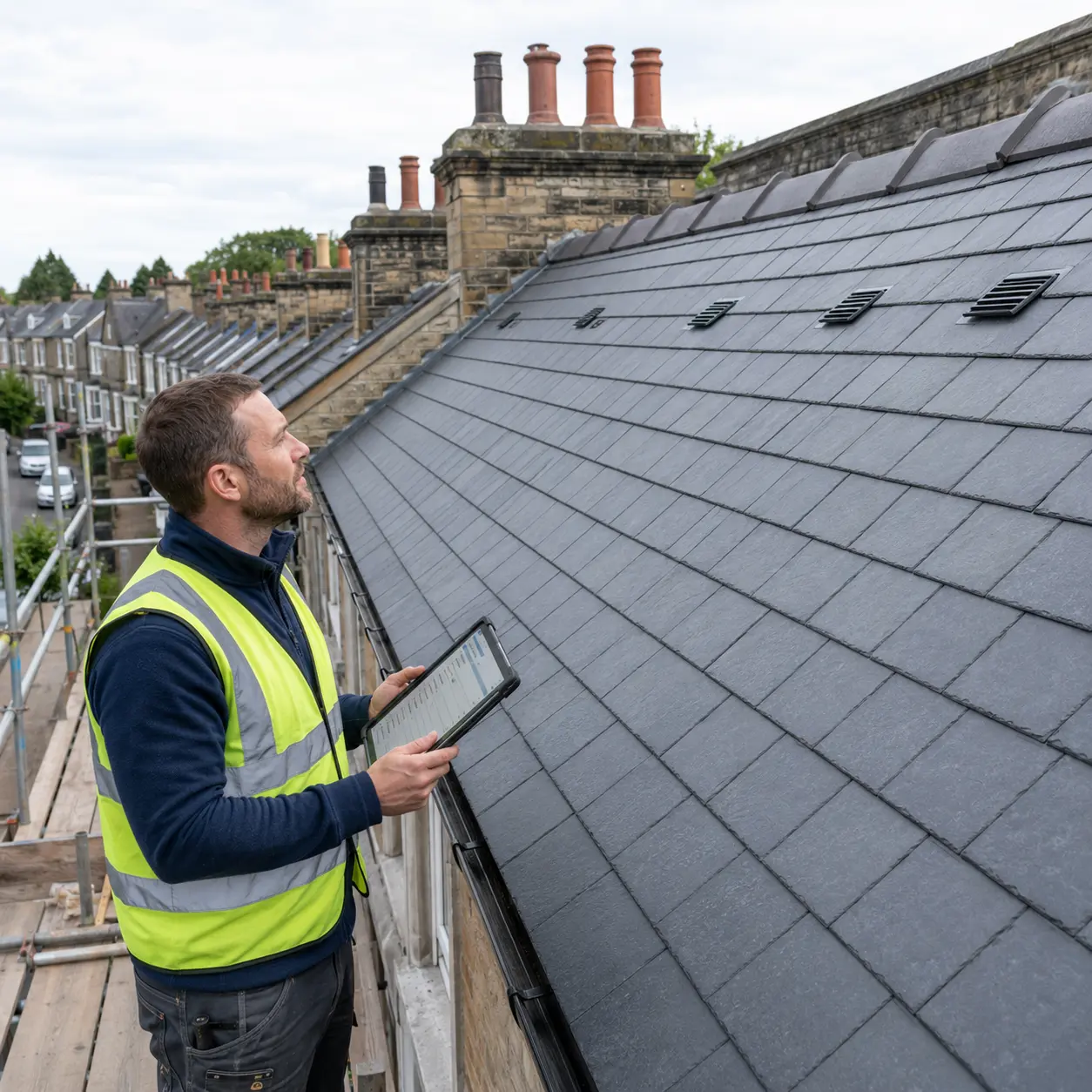
On the exhaust side, ridge vents installed along the highest point of the roof draw warm air out continuously and work in genuine partnership with the intake vents below. For roofs where a continuous ridge vent is not practical, tile vents or slate vents fitted at high points provide a sensible alternative. The goal is balance, not maximum airflow, so the design needs to match the size and shape of the specific roof.
For homes where condensation problems extend beyond the loft into the living spaces, a positive input ventilation system can help by introducing filtered fresh air into the home and reducing overall humidity. These systems work best when paired with a properly functioning roof ventilation arrangement rather than as a replacement for it.
Any work on insulation should include a review of ventilation. The two are interdependent, and improving one without considering the other almost always creates a problem somewhere else.
Different Homes Need Different Approaches
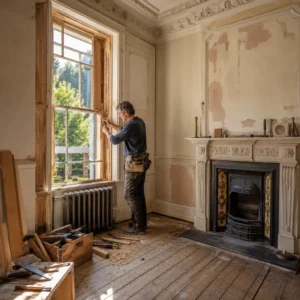
Period properties such as Victorian terraces and older semi-detached homes need a careful hand. The breathability of traditional building fabric, the original roof construction, and the slope of the roof all influence what ventilation upgrades are appropriate. Aggressive sealing of older homes can do more harm than good, while well-placed vents that respect the original construction can transform the condition of the loft.
Modern homes face the opposite challenge. Tight construction standards mean very little accidental airflow, and ventilation must be deliberately designed in from the start. New build properties, recent loft conversions, and recently refurbished homes all benefit from a ventilation strategy that meets current building regulations, supports long-term energy efficiency, and helps future-proof the home by protecting insulation performance, structural timbers, and indoor comfort for years to come.
Conclusion
Roof ventilation rarely makes it onto a homeowner’s list of priorities until something has already gone wrong. Catching the problems early, before damp, mould, and structural decay take hold, saves considerable cost and protects the rest of the property. If you have noticed any of the warning signs in your loft or upstairs rooms and would like a clear, honest assessment, the team at Ionesi Development is happy to take a proper look and recommend the right approach for your home.