
Introduction
There are few less welcome ways to start a winter morning than stepping barefoot onto an ice-cold tiled bathroom floor. It’s one of the small daily irritations that bathroom underfloor heating sets out to solve, replacing that initial chill with gentle, even warmth from the ground up. Increasingly common in UK renovations, it has shifted from a luxury extra to something many homeowners now factor in as standard. That said, it isn’t the right choice for every bathroom or every budget. At Ionesi Development, we think it’s worth understanding honestly how it works, what it costs to run, and when it genuinely earns its place before you commit.
How Bathroom Underfloor Heating Works
Underfloor heating warms a room from the floor surface upwards, rather than relying on a single hot radiator pushing heat across the space. The result is a more even spread of warmth and no cold corners.
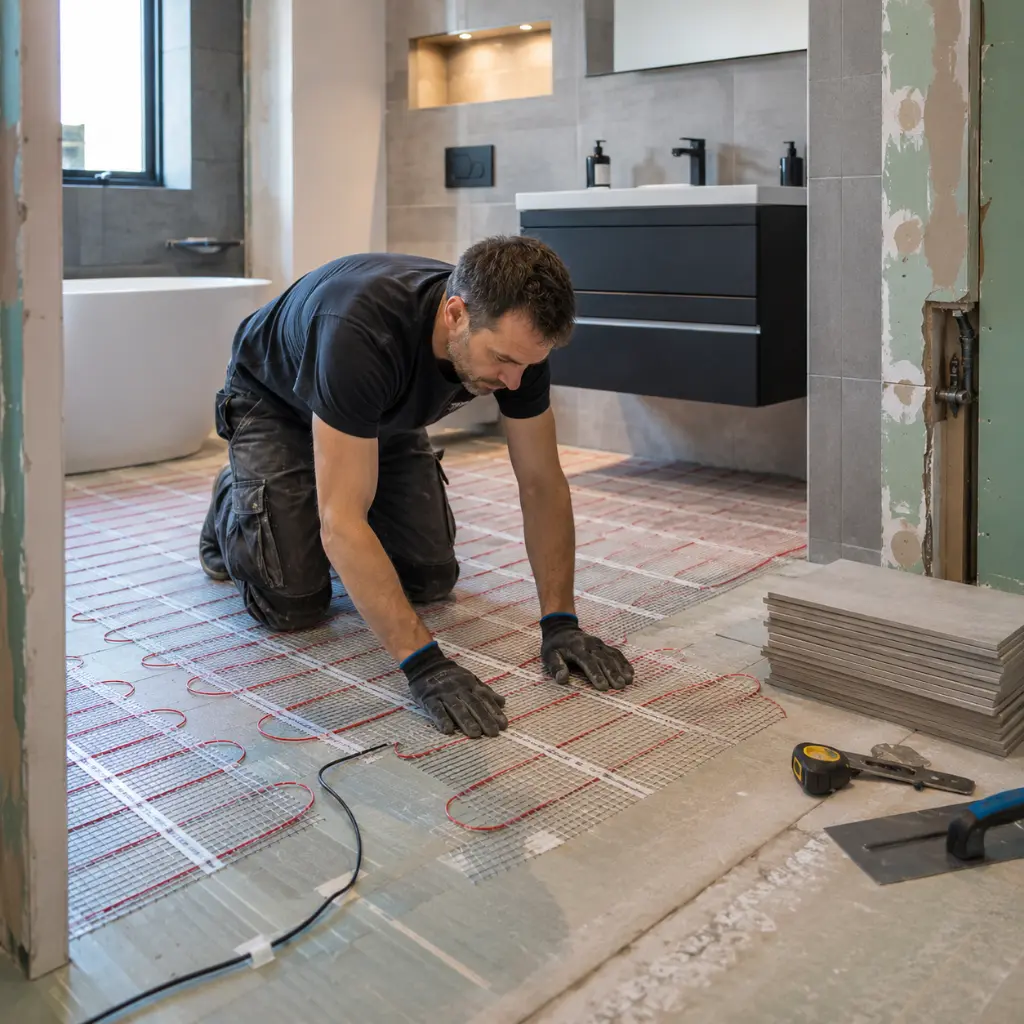
There are two main systems to choose from. Electric underfloor heating uses thin heating mats or cables laid directly beneath the floor finish, usually tile. It’s straightforward to fit and well-suited to most bathroom retrofits, particularly in compact rooms. Wet, or water-based, systems run warm water through pipes connected to a boiler or heat pump. They are generally more economical to run over larger areas and are often preferred in whole-house renovations or new-build projects.
Benefits of Underfloor Heating for Bathrooms
The appeal goes well beyond warm toes, though that comfort is the part most people notice first. A heated floor delivers a consistent room temperature without the hot-and-cold patches you get from a wall-mounted radiator.
The practical advantages stack up quickly:
- Freed-up wall space with no radiator or only a slim towel rail needed, you reclaim valuable wall area. In a small terraced-house bathroom where every centimetre matters, that flexibility is genuinely useful.
- Warm flooring underfoot cold ceramic, porcelain and stone floors that normally feel uninviting become pleasant to stand on.
- A cleaner form of heat without hot surfaces circulating dust around the room, it’s a tidy, low-fuss way to keep a bathroom warm.
- Quiet and concealed the entire system sits out of sight beneath the floor, leaving the design clean and uncluttered.

When Underfloor Heating May Not Be Worth It
No upgrade suits every situation, and underfloor heating has trade-offs worth weighing before you decide.
The upfront cost is higher than simply fitting a heated towel rail or a conventional radiator. It also warms up more gradually than a radiator that blasts out heat on demand, so it works best on a timer or thermostat set to come on ahead of when you need it. Retrofitting brings its own complications: laying a system under an existing floor usually means lifting that floor first, which adds both disruption and expense. There’s also the floor height to consider the system and any insulation board raises the floor level slightly, which can affect door clearances in a tight bathroom.
Bathroom Underfloor Heating Cost: What to Expect
The cost of bathroom underfloor heating depends on several factors, including the size of the room, the type of system being installed, the condition of the existing floor, and whether the work forms part of a wider renovation. Electric systems are generally easier to install in existing bathrooms and are often preferred for smaller spaces, while water-based systems tend to make more sense as part of larger renovation projects or new builds.
Installation costs can also increase if the existing flooring needs to be removed or if additional floor preparation is required. Insulation boards are a worthwhile addition, as they help direct heat upwards into the room rather than allowing it to escape into the subfloor, improving overall efficiency and performance.
Running Costs
Ongoing running costs depend largely on how efficiently the system is controlled and insulated. A programmable or WiFi thermostat allows heating schedules to be tailored around daily routines, helping to avoid unnecessary energy use. Good insulation beneath the heating system also improves heat retention, allowing the floor to warm up more quickly and maintain a comfortable temperature with less energy. When properly insulated and controlled with a programmable thermostat, underfloor heating can operate efficiently. Actual running costs will depend on the size of the bathroom, the system type, energy tariffs, and how frequently the heating is used.
Choosing the Right Flooring
Not every floor finish performs equally over a heating system. The best options conduct heat readily and cope happily with the regular warming and cooling cycle.
Tile and stone are the natural partners here; they transfer heat well and retain it, which is exactly what you want underfoot. Some vinyl and laminate products are rated for use with underfloor heating, but it’s essential to check the manufacturer’s guidance, as not all are suitable and excess heat can damage the wrong type.
| Flooring type | Suitability |
|---|---|
| Porcelain & ceramic tile | Excellent |
| Natural stone | Excellent |
| Rated vinyl | Good |
| Rated laminate | Use with care |
Planning and Installation
Bathroom underfloor heating is best installed during a bathroom renovation, when the floor is already being replaced. Electric systems should be installed and connected by a qualified electrician, while water-based systems should be designed and installed by suitably qualified heating professionals. Proper waterproofing, insulation, and floor preparation are equally important, and the heating system should be planned alongside the tiling and bathroom fitting work to ensure reliable performance and avoid costly issues later on.

Is Bathroom Floor Heating Worth It?
The honest answer depends on timing. If you’re already renovating a bathroom and the floor is coming up regardless, the case for underfloor heating is strong. The extra cost is modest relative to the comfort it adds. A warm, well-finished bathroom can enhance the room’s appeal and support long-term property value.
Where it makes less sense is as a standalone retrofit into a bathroom that was recently finished. Retrofitting underfloor heating into a recently completed bathroom may not always offer the same value as installing it during a planned renovation. Matching the decision to the stage of your project and to your budget is what makes it a sound choice rather than an expensive afterthought.
Conclusion
Bathroom underfloor heating is a worthwhile upgrade when planned as part of a wider renovation, particularly when the existing flooring is already being replaced. Installed at the right stage, it delivers lasting comfort, efficient heat distribution and a cleaner bathroom layout. Whether it suits your project depends on your budget, flooring choice and long-term priorities. Where the bathroom forms part of a larger home extension or renovation project, coordinating the work early can help achieve a more efficient and cohesive result. For homeowners considering a bathroom refurbishment, Ionesi Development can help ensure heating, flooring and layout decisions are integrated seamlessly into the overall design.